
New arrivals – TransporterGuard
Technical Comparison: Standard Encryption vs. Four-Node Vectorization
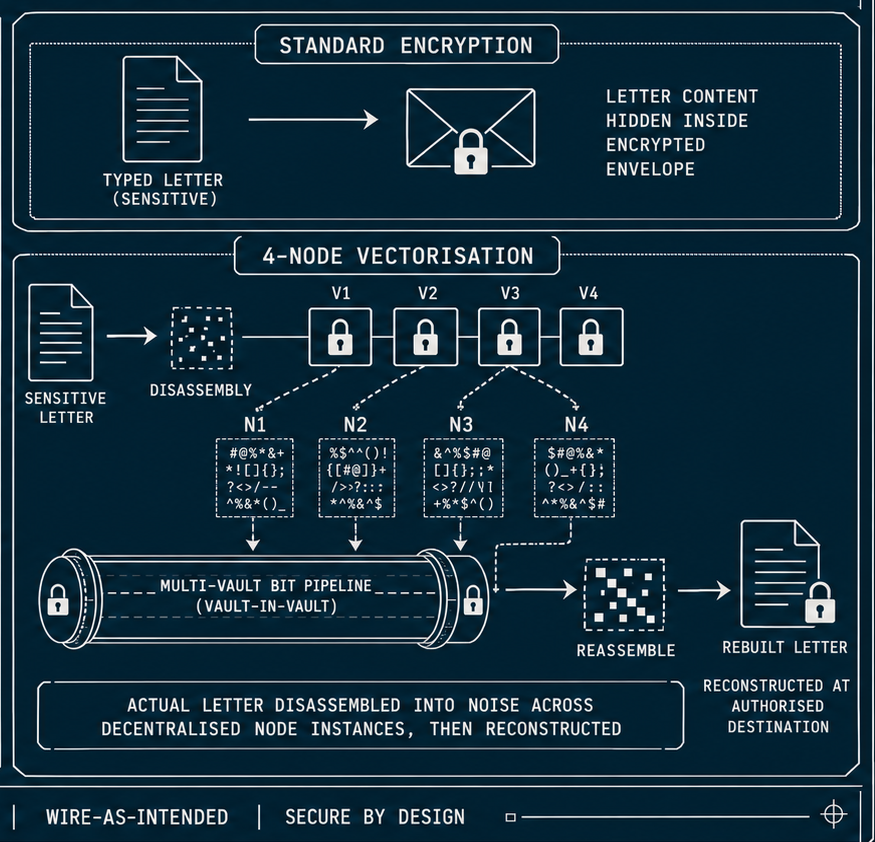
Standard encryption can be compared to placing a sensitive, handwritten letter inside a secure envelope. While the envelope protects the contents during transit, the intact envelope itself remains visible and vulnerable to interception. If an adversary steals the envelope, they can warehouse the data, meaning the security of the letter relies entirely on the strength of the encryption remaining unbroken over time.
Technical Comparison:
Four-Node Vectorization (QuorumChain Posture)
Four-Node Vectorization elevates this process by introducing a dynamic, multi-layered security transport architecture:
Disassembly into Noise Shards: The data packet (the letter) is first secured using industry-standard AES-256 encryption within a digital envelope. However, instead of transmitting the envelope whole, it is immediately disassembled into fragmented bits of cryptographic noise.
The Secure Pipeline (Vault-in-Vault): These noise shards are cloaked within a secure, logical vault environment and routed across the network. Because the envelope does not exist in a unified state during transit, it is completely invisible to external network observers
Conditional Reassembly: The shards are only reassembled and decoded once they arrive at the authorized destination node, entirely within the confines of the protective vault.
Time-Locked & Context-Aware Execution: The final vault containing the plaintext data operates under strict, pre-determined parameters established at departure. It will not open until its specific time-lock expires, and it will only open if the destination environment confirms a verified, safe posture.
Result: Zero data visibility during transit, zero reliance on a single point of failure, and absolute control over precisely when and where the data is ultimately exposed.
Solutions for Industry
AAMS — Aiden Architectural Memory System
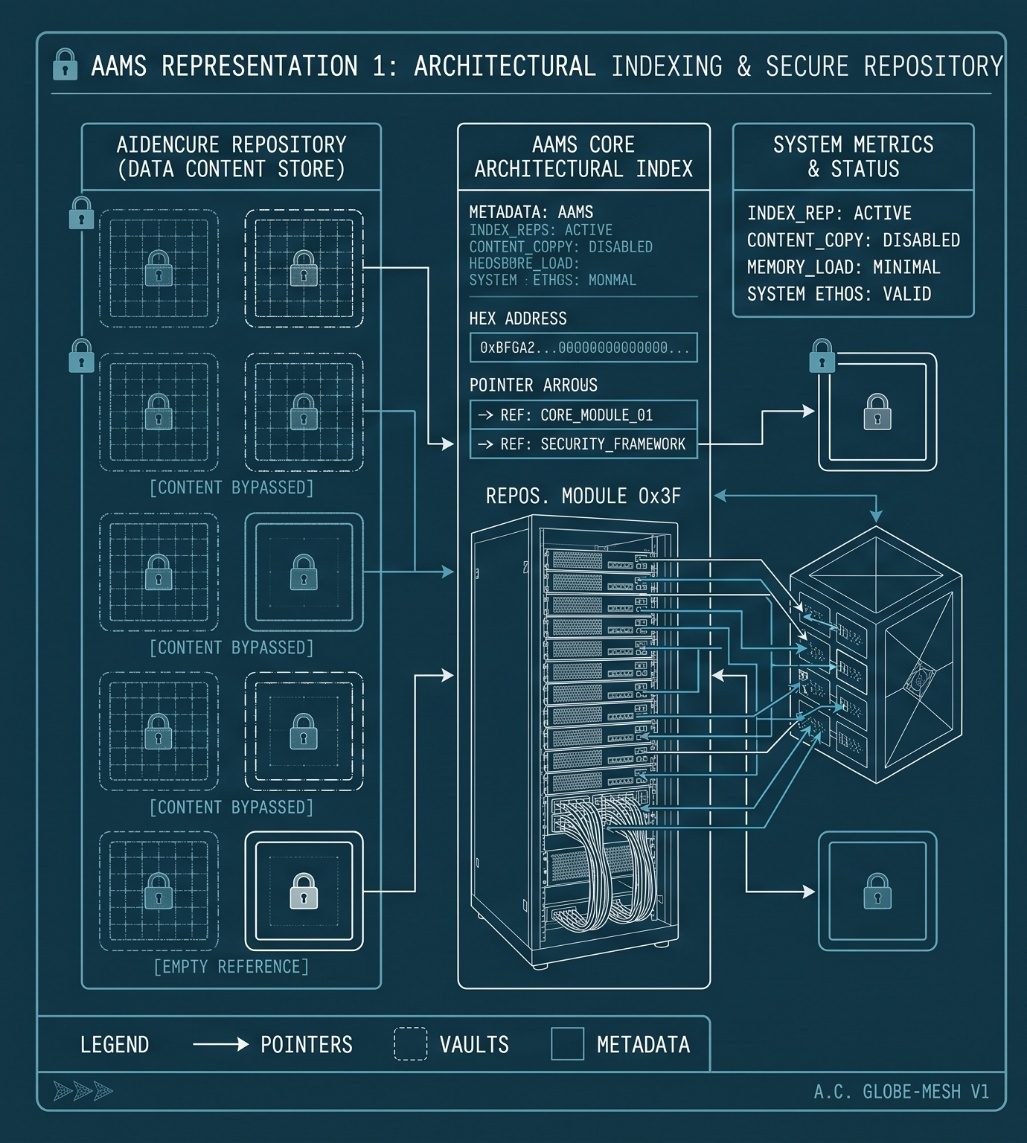
AAMS (Aiden Architectural Memory System) is a pointer-only architectural memory index for the AidenCore repository.1
AAMS records important architectural knowledge about the system without copying the content itself.
DVE
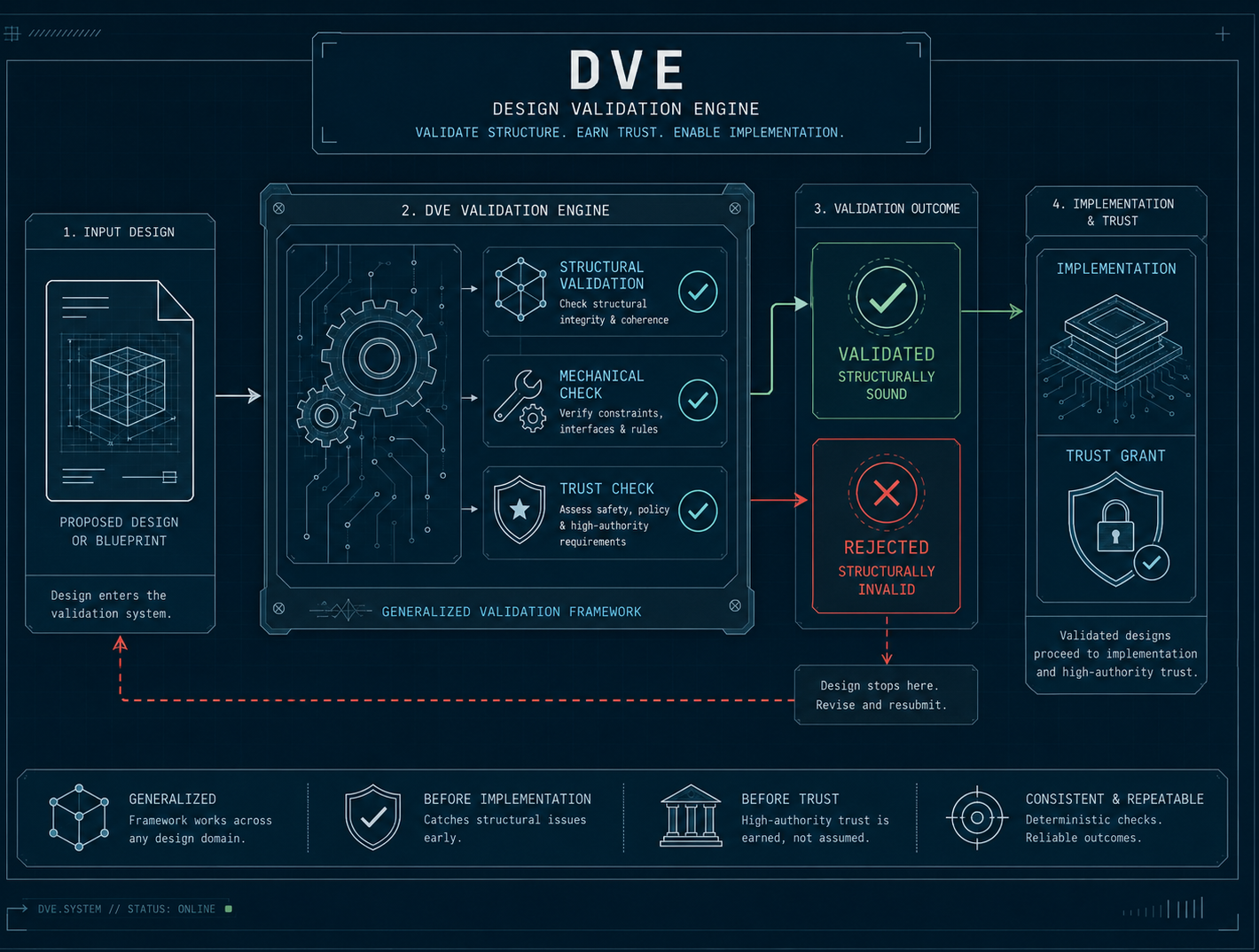
DVE means Reusable Design Validation Engine.
It is a generalized validation framework that checks whether a design is structurally valid before implementation or before high-authority trust is granted.
DVE is the system that asks, and mechanically checks, whether a design is structurally sound before that design is trusted.
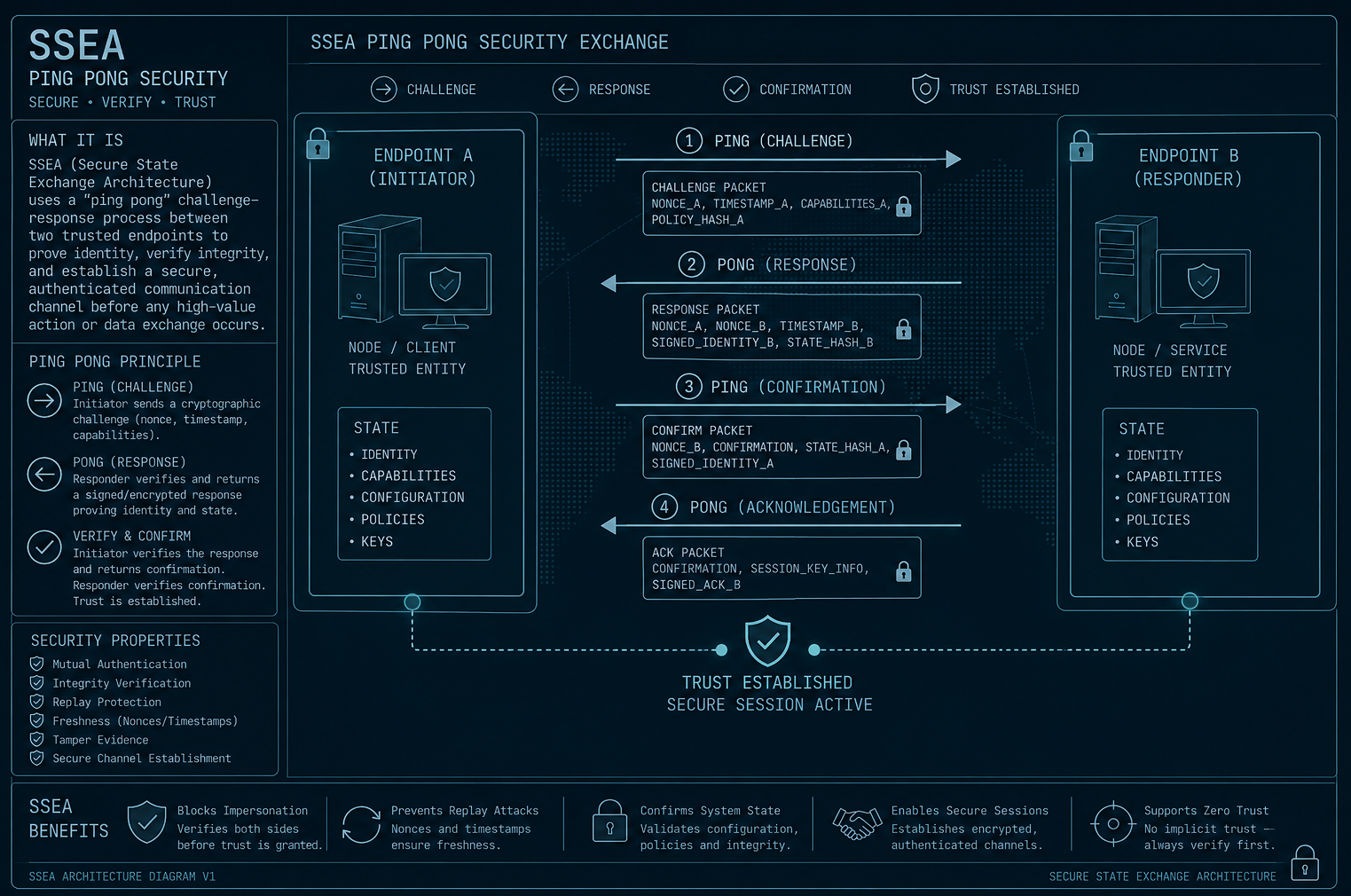
SSEA
SSEA keeps authority moving between paired endpoints through challenge, response, receipt, and verification. One node sends a bounded request, the other validates This creates a controlled security rhythm where trust is not assumed once; it is continuously re-earned through reciprocal checks.
Our services
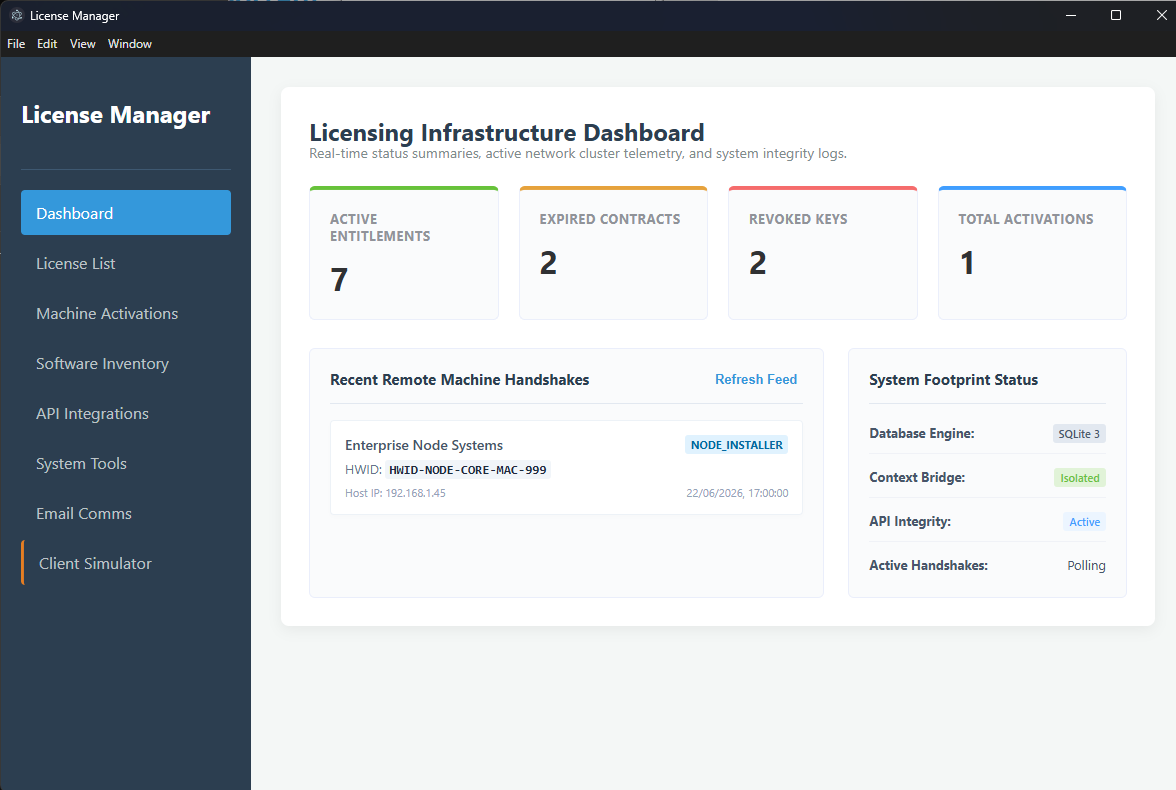
Digital License Manager2
Digital License Manager controls software access, activation, and customer entitlement from one governed dashboard. It lets an administrator issue, monitor, renew, suspend, or revoke licences while keeping a clear record of which client, machine, or user is authorised to run protected software.
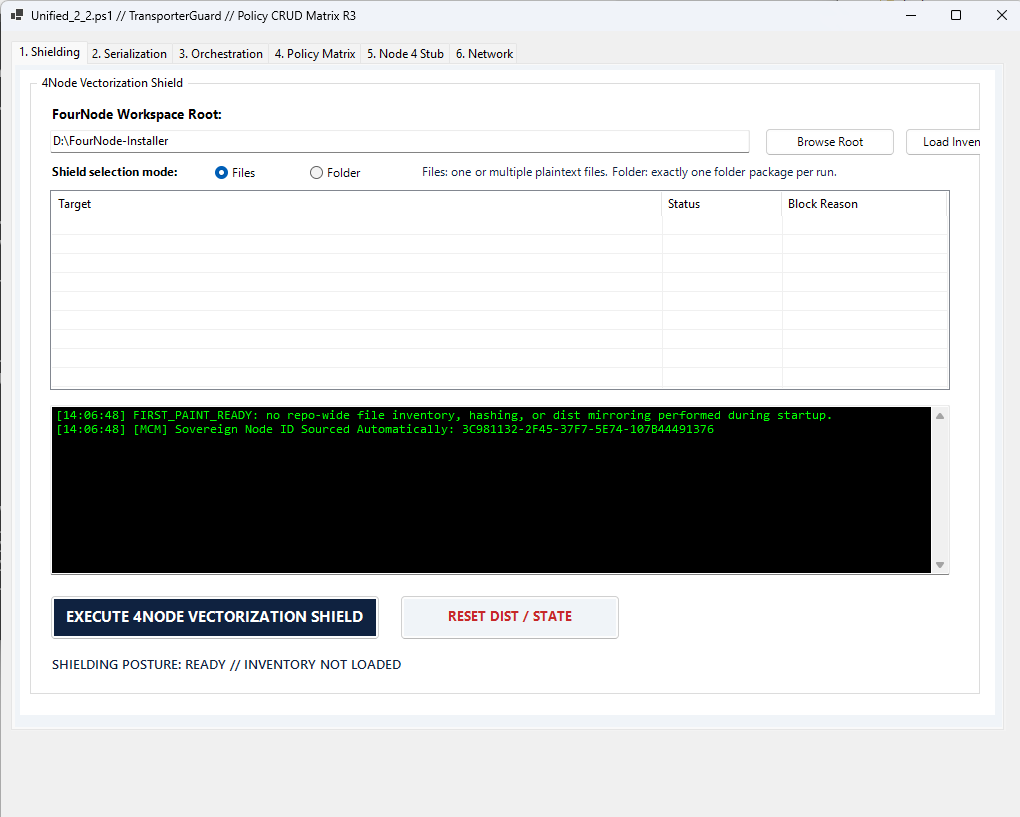
Software Encryption
The user selects selected software files before and after installation by keeping predetermined assets encrypted on the client machine while still allowing the application to read them during runtime. Its purpose is to make software deployment harder to copy, tamper with, or extract, without adding noticeable delay for the legitimate user.
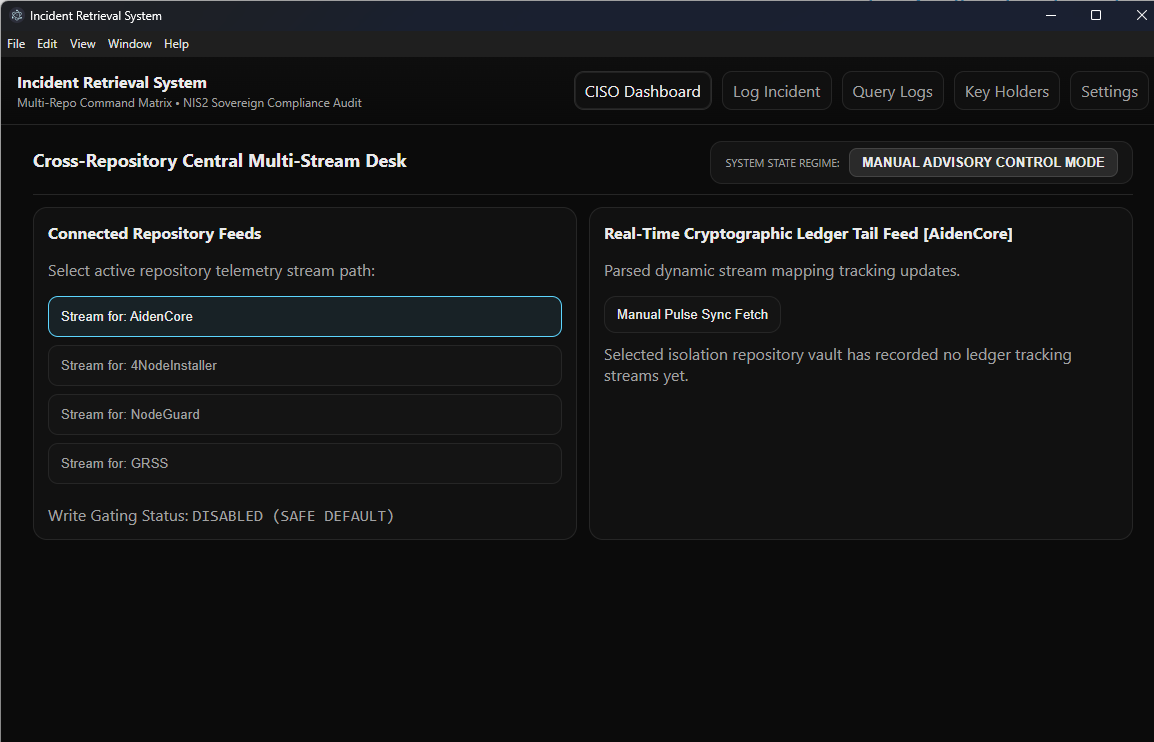
Incident Retrieval
Incident Retrieval System helps recover, organise, and review incident evidence after a failure, breach, or disputed system event. It is designed to pull together the relevant logs, receipts, state records, and proof artifacts so an operator can understand what happened, preserve evidence, and support a governed response.
Our services
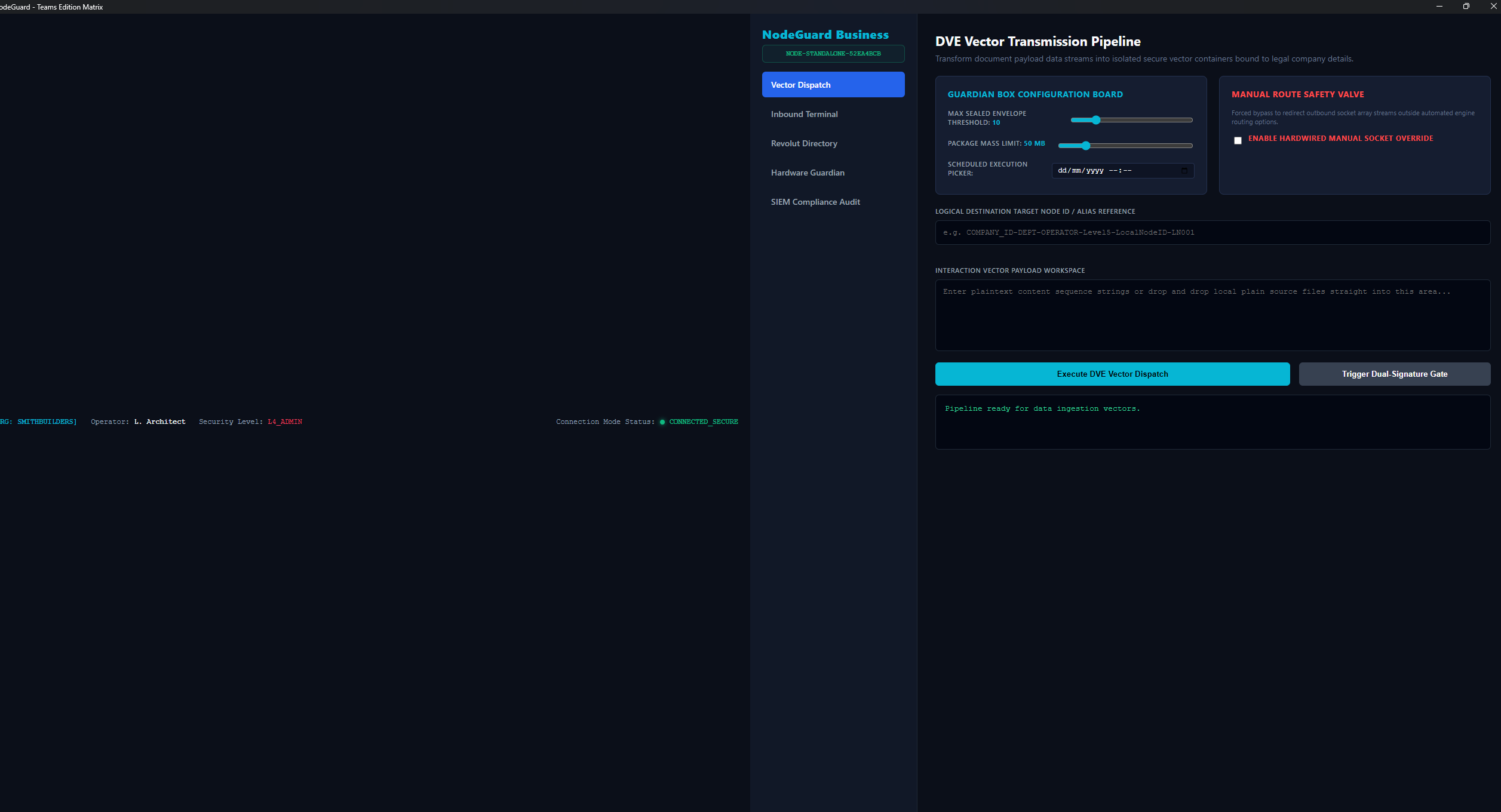
TransporterGuard
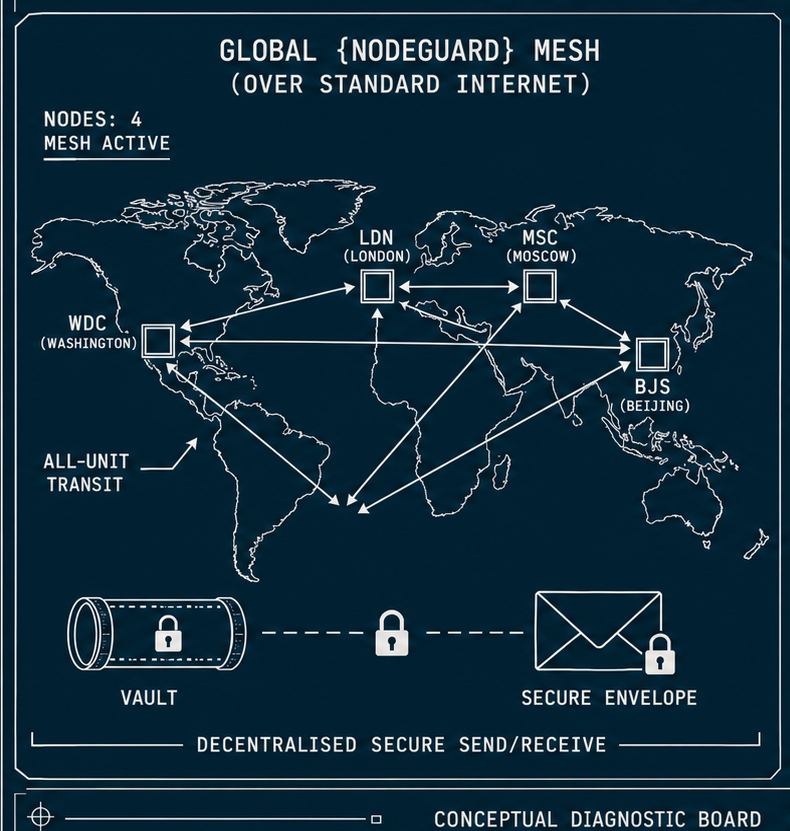
With Vector Delivery , packets of data or documents can be sent from computer to computer over standard Internet Architecture. . . From Moscow to Washington, London to Beijing. Secure data packets can be sent without interference from third parties.
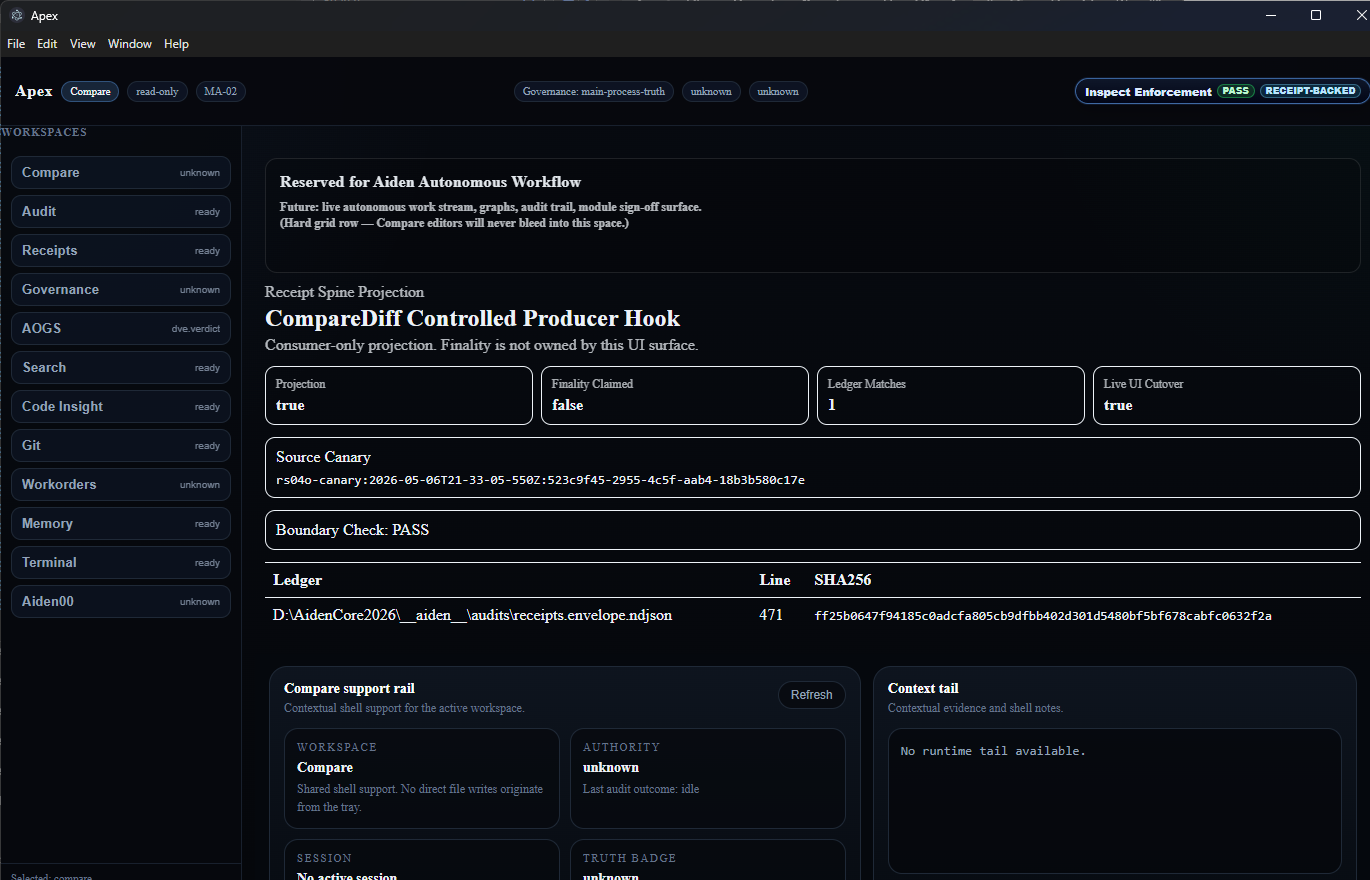
AidenCore
AidenCore is the enterprise-scale governance engine at the centre of the platform — the jewel in the crown. It is designed to coordinate trusted AI operations across organisations by validating designs before they are trusted, governing agent authority, preserving memory and proof, and turning AI activity into structured evidence. At enterprise scale, AidenCore becomes the control layer for accountable AI: it links policy, audit, compliance, node governance, secure delivery, and decision proof into one governed architecture, allowing businesses to use autonomous systems without losing human oversight, traceability, or operational control.
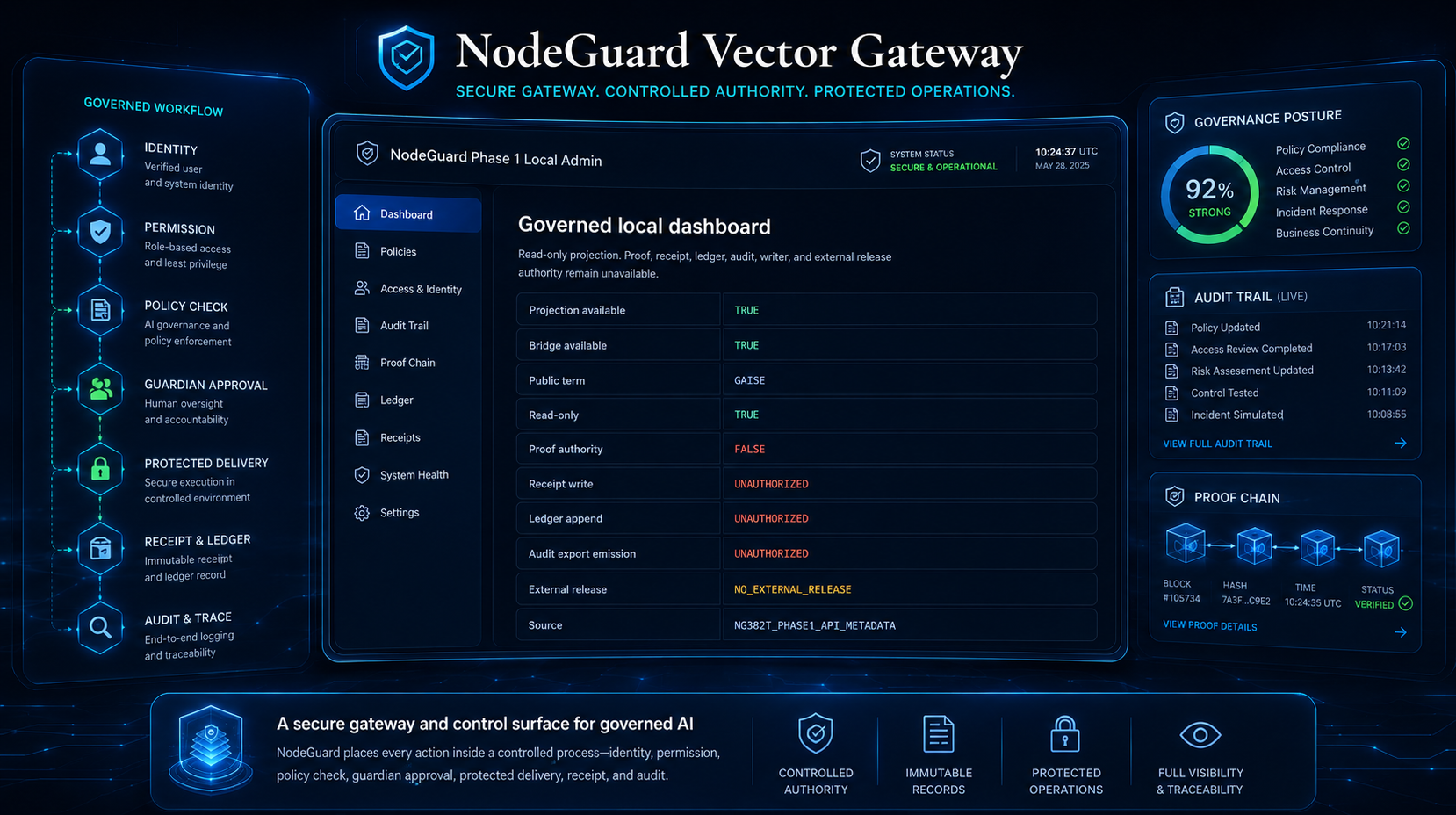
NodeGuard Vector Gateway
A secure gateway and control surface for organisations that want to use AI agents without giving those agents uncontrolled access to systems, files, workflows, or decisions.
Its purpose is to create a governed bridge between a human operator, trusted AI nodes, protected client systems, and secure delivery locations. Instead of allowing an AI agent to act freely inside a business environment, NodeGuard places every action inside a controlled process: identity, permission, policy check, guardian approval, protected delivery, receipt, and audit.
AidenCore and NodeGuard are designed around a Single-Pass Governance Pipeline: identity, policy, receipt, ledger anchoring, and delivery authority are evaluated as one governed transaction. The aim is continuous applied security with no noticeable latency effect, avoiding the operational drag of bolted-on, sequential security checks.
“Is your AI infrastructure governed, or is it merely managed?
Is your AI infrastructure governed, or is it merely managed?
Boardroom-level security requires more than just policy; it requires mathematical, repeatable proof. Whether you are navigating NIS2 mandates or securing proprietary IP in an air-gapped environment, AidenCore provides the structural governance your enterprise demands.
Schedule a technical deep-dive with our architecture team. Discover how we move trust from an organizational claim to a verifiable, cryptographic function.nual coding. It is the ultimate realization of Policy-as-Code.